


Nidecker Supermatic Bindings | Step-In Snowboard Binding System
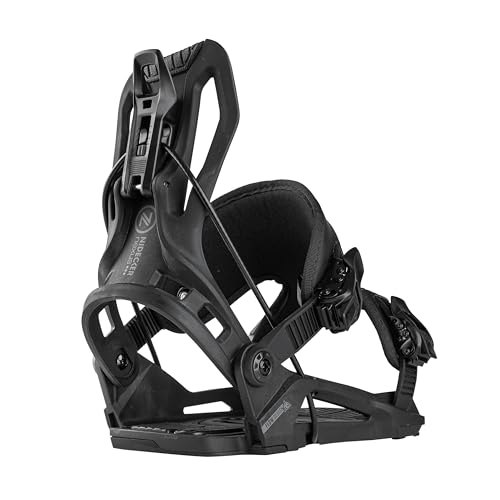
We built the Nidecker Supermatic bindings to solve the fundamental problem every rider faces—strapping in. Step into the binding, flip the highback forward, and you're locked in. No bending over, no buckles, no wasted time on the chairlift exit. The Supermatic system pairs our Auto-Lock™ ankle strap technology with a PowerTriangle baseplate for instant entry without compromising response.
Our design delivers what traditional strap bindings can't—the convenience of step-in combined with the board feel and adjustability riders demand. Whether you're lapping the park or charging powder, the Supermatic responds like a high-performance strap binding because it uses the same geometry and materials. We replaced the hassle, not the performance.
Core Technologies
How the Step-In System Actually Works
The Nidecker Supermatic bindings use a three-point Auto-Lock mechanism that activates when you flip the highback forward. Your boot heel slots into the rear cup, the ankle strap auto-tensions across your instep, and the toe strap cinches through mechanical advantage—all in one motion. There’s no electronics, no batteries, and no special boots required.
The system’s key innovation is the strap memory feature. Once you dial in your preferred strap tension using the tool-free adjusters, the binding remembers that setting. Every entry after that delivers identical hold and board control. The geometry replicates what a properly tightened strap binding feels like, because the ankle strap follows the same wrap angle and pressure distribution.
Baseplate Construction & Energy Transfer
PowerTriangle Geometry
Our PowerTriangle baseplate uses a three-point contact design that distributes force across heel, toe, and lateral axis simultaneously. The shape eliminates flex dead zones common in rectangular baseplates, especially during toe-side carves. The 30% fiberglass-reinforced nylon composite provides stiffness where you initiate turns while maintaining enough dampening to absorb chop.
Footbed & Pressure Management
The canted footbed angles your knee alignment to reduce ankle fatigue on long days. We built in 2.5° of outward cant to match natural standing posture, which also opens your stance slightly for better balance in powder. The Active Strap Technology distributes pressure across the entire footbed rather than concentrating load at strap contact points—your feet stay comfortable through consecutive runs without going numb.
Strap System & Micro-Adjustability
The ExoFrame ankle strap is the same component we use on our competition-level strap bindings. It wraps 180° around your boot with EVA padding that conforms to any boot profile. The tool-free adjustment dials let you fine-tune strap tension in 1mm increments without loosening a screwdriver—make changes on the mountain between runs.
Both ankle and toe straps lock into memory slots once you set your preferred tension. The step-in mechanism replicates that exact strap position every single entry, which means your stance feels identical from first chair to last. Riders who obsess over strap placement get the same precision as manual buckle systems, but the binding applies it automatically.
Complete Your Supermatic Setup



Rated 4.8 by verified buyers

Common Questions About Nidecker Supermatic Bindings
Yes, the Supermatic system is compatible with all major snowboard boot brands and models. You don't need proprietary boots—the binding's heel cup and ankle strap accommodate any boot with a standard snowboard sole. We designed the Auto-Lock mechanism to auto-adjust for different boot volumes and sole lengths from US men's size 7-13 and women's 5-11.
The ankle strap wraps 180° around your boot regardless of brand-specific toe box shapes or flex patterns. If your boots fit in traditional strap bindings, they'll work perfectly in the Supermatic.
Most riders clip into Nidecker Supermatic bindings in under 2 seconds once they're familiar with the motion—step in, flip the highback forward, done. Traditional strap bindings typically take 8-15 seconds depending on how many times you adjust buckles.
The time savings compound over a full day. On a typical 20-run day, you save roughly 3-5 minutes total, which means more actual riding time and less fatigue from repetitive bending and buckling. Riders with mobility limitations or knee issues report even bigger benefits since the step-in motion requires zero bending or crouching.
Absolutely. We designed every adjustment point on the Supermatic for gloved operation. The highback lock lever is oversized and textured for grip even with thick mittens. The tool-free strap adjustment dials are knurled and raised above the binding surface so you can turn them without exposing your hands.
Forward lean adjustment, toe strap positioning, and stance angle changes all use finger-friendly levers and quick-release mechanisms. You can make any tuning adjustment on the chairlift or at the top of a run without removing gloves or digging tools out of your pack.
The Supermatic rates as a medium-stiff binding, roughly 7 out of 10 on the flex scale. The PowerTriangle baseplate and fiberglass-reinforced highback deliver responsive energy transfer for aggressive all-mountain riding and carving.
You can tune the feel slightly by adjusting forward lean—0° for a more relaxed park setup, 15° for charging steeps and hard snow. The ankle strap tension also influences perceived flex; cranking it tight gives you more direct control, while backing it off a notch allows more boot articulation for tweaked grabs and butters.
No. We engineered the Auto-Lock system with sealed channels and self-clearing geometry. As the highback closes, the mechanical motion automatically pushes snow and ice out of the strap ladders and locking pivot points.
We tested the bindings through freeze-thaw cycles down to -20°F with deliberate snow packing, and the mechanism cleared itself on every single entry. If you do get ice buildup during an especially wet spring day, a single tap of the binding against your board edge clears any debris. The stainless steel springs and aluminum components don't corrode or seize up from moisture exposure.
You'll feel and hear a distinct click when the highback locks into riding position. The Auto-Lock mechanism has a positive engagement that provides tactile and audible confirmation—there's no guessing whether you're secured.
Visually, the highback sits flush against the adjustment tower when fully locked, and the ankle strap shows even tension across its entire width. After your first few runs, the motion becomes completely automatic. Most riders develop muscle memory within a single morning session and can confirm lock status by feel alone without looking down.
While the Supermatic bindings mount to splitboards using standard insert patterns, we don't specifically recommend them for backcountry touring. The step-in convenience works great at resorts where you're making frequent entries and exits, but splitboarding requires switching between ski mode and ride mode—a use case better suited for dedicated touring bindings with climbing heels.
That said, some riders do use them on resort-accessed sidecountry laps where they're not transitioning modes repeatedly. The binding's weight (slightly heavier than ultralight touring setups) and the highback's fixed geometry (not designed for skinning) make it less ideal than purpose-built split hardware for serious backcountry missions.